A Case of the Human Condition: How Facebook Helped Jana Riess Grieve

A retablo from San Miguel, Mexico. c 2008 Barbara Falconer Newhall

By Barbara Falconer Newhall

A very touching story on Patheos by author Jana Riess about how Facebook helped her grieve.

Apparently, FB has a policy of shutting down a FB account if it hears that the owner has died — much to the distress of friends and family members who have grieved together on the deceased person’s FB site.

Your thoughts? Have you had this experience?

EmailFacebookTwitterStumbleUponPrintFriendlyShare

Book Openers: Why Are All Those Catholics – So Darned Catholic?

By Barbara Falconer Newhall

What is at the heart of Catholicism? What makes all those Catholics so tenaciously Catholic?

The Rev. Robert Barron would say – the Incarnation. The central truth of all Christianity is the shocking notion that God, the Creator and Ground of the Universe, humbled itself to take on human form, to enter into and enhance creation.

The difference between Catholicism and the rest of Christianity, according to Barron, is that other denominations fail to take the Incarnation seriously enough. If one does indeed accept Jesus as the human face of God, after all, the ramifications are huge and – quite literally – awesome.

Barron cites an often overlooked passage in Mark (10:32): “And they were on the road, going up to Jerusalem and Jesus was walking ahead of them; and they were amazed, and those who followed were afraid.”

And why not? If that is indeed God Incarnate walking up the road ahead of you, fear and amazement would be the most fitting response. And that, according to Barron, is why Christianity in general, and Catholicism in particular asks for a commitment: Is Jesus divine? Or not?

Barron says yes, and from there his text marches boldly on to explain and assert the body of Catholic belief as centuries of church authorities have built and elaborated upon it – beginning with the Incarnation and extending to the Resurrection, Pentecost, the Immaculate Conception of Mary, the apparitions at Lourdes, the communion of saints like Therese of Lisieux and Katharine Drexel, and the doctrines of heaven, hell and purgatory.

Barron also tackles – fearlessly – the Catholic church’s age-old understanding of the real presence of Christ in the Eucharist, which Barron characterizes as “nothing other than a sacramental extension of the Incarnation across space and time, the manner in which Christ continues to abide, in an embodied way with his church.”

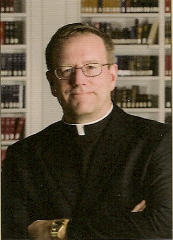
Author Robert Barron

Protestant and Orthodox Christians, of course, would assert that accepting the Incarnation does not necessarily lead to faith in an Immaculate Conception, in  miracles at Lourdes or any of the other doctrines of the church — including those prohibiting the use of birth control.

But Barron, to his credit, is a wonderfully lucid writer who, like his church, is not afraid to commit to a clear and powerful understanding of who Jesus was. Which maybe explains why the Catholic church continues to be such a powerful force in the lives of millions of Catholics around the world.

Barron is the Francis Cardinal George Chair of Faith and Culture at Mundelein Seminary and the host of the ten-part documentary series Catholicism to be aired on PBS stations beginning this month.

Catholicism: A Journey to the Heart of the Faith, by Robert Barron, Image, 2011, $27.99 hardcover.

EmailFacebookTwitterStumbleUponPrintFriendlyShare

The Hagia Sophia: Where Christianity and Islam Coexist — and Clash

The Hagia Sophia -- Madonna with roundels, Muhammad & Allah. Photo by BF Newhall

In the Hagia Sophia, Christianity's Madonna and Child are flanked by roundels with Arabic script bearing the names of Muhammad and Allah. The rondels were added to the basilica when it became a mosque after the Turks conquered Constantinople in 1453. All photos by BF Newhall 2009

By Barbara Falconer Newhall

As a religion writer, I’ve got plenty of respect for Islam as well as for the many (friendly, smart, lovable, cool, inspiring) Muslims I’ve met on the religion beat over the years. So, trust me. This is not a rant against Islam or Muslims.

It’s about how it feels to have one’s culture and faith obliterated by someone else’s culture and faith. [Read more...]

EmailFacebookTwitterStumbleUponPrintFriendlyShare

Book Openers: Green for God

By Barbara Falconer Newhall

The Green Bible: Understand the Bible’s Powerful Message for the Earth, NRSV, Foreword by Desmond Tutu, HarperOne, 1312 pages, $29.95.

Holy Ground: A Gathering of Voices on Caring for Creation, Lyndsay Moseley and the staff of Sierra Club Books, Sierra Club,  264 pages, $22.

If you or someone you know has any doubt that the Jewish and Christian traditions value the Earth with all its myriad flora and fauna, thumb through HarperOne’s Green Bible. Highlighted in green are the many passages calling upon humanity to respect and care for the Earth – even in times of war.

Check out Deuteronomy 20:19, for example. “If you besiege a town for a long time, making war against it in order to take it, you must not destroy its trees by wielding an ax against them.”

Or Timothy 4:4 – “For everything created by God is good, and nothing is to be rejected, provided it is received with thanksgiving.”

For the most part, The Green Bible does not gloss over the Bible’s more difficult passages. Genesis 6:7 with all its divine anger is highlighted in green: “I will blot out from the earth the human beings I have created – people together with animals and creeping things and birds of the air, for I am sorry that I have made them.”

But it does let stand  — in inconspicuous black type — the story of Jesus cursing the out-of-season fig tree. Mark 10:12-14:  ” . . . When he came to it, he found nothing but leaves, for it was not the season for figs. He said to it, ‘May no one ever eat fruit from you again.’”

Holy Ground, from the Sierra Club, celebrates the sacredness of creation with an interfaith collection of personal stories, sermons and essays from the likes of Pope Benedict VXI, Terry Tempest Williams, Gary Snyder, Wendell Berry and Patriarch Bartholomew.

Open to page 239 and read Gary Snyder’s remarkable words on humanity’s place on the food chain. “Eating is a sacrament,” he writes. If we eat meat, “it is the life, the bounce, the swish, of a great alert being with keen ears and lovely eyes, with foursquare feet and a huge beating heart that we eat, let us not deceive ourselves.”

And don’t forget either, says Snyder, “We are all edible.” We too will be offerings some day, devoured most likely by very small critters.

Food for thought.

EmailFacebookTwitterStumbleUponPrintFriendlyShare
<?php if ( function_exists( 'yoast_analytics' ) ) { yoast_analytics(); } ?>