An Case of the Human Condition: A Child Is Born — And So Is a Grandpa

By Barbara Falconer Newhall

My friend Jake is a man in his prime. He does triathlons, reads good books, knows all the best hiking trails, drinks nice wines, and likes nothing more than a good, scrappy conversation.

In other words, Jake has never been anybody’s rickety old grandpa. 

Until recently.

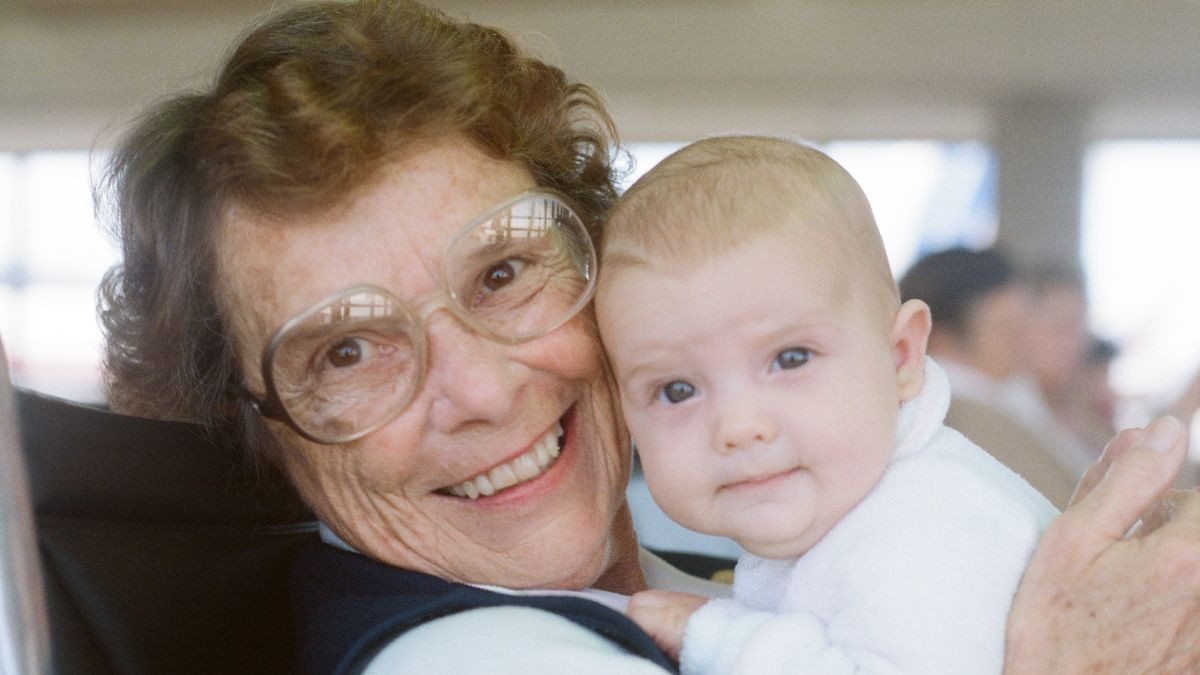
A few months ago, Jake’s daughter gave birth to a baby girl. Jake couldn’t be happier about this delightful new creature in his life.

He wasn’t so sure about his new status as a grandfather, however. It would require him to make a decision, a big one.

What would this child call him?

Jake? Jakey? Jay-Jay?

Anything but Grandpa.

Grandpa - that’s what they call the old guys. And Jake was not an old guy.

I feel his pain. My own father went by Grandpa. My grandfathers were Grandpa Falconer and Grandpa Dick. My mother is Grandma. Old people all.

What’s more, where I come from, Grandpa is not pronounced Grand Pa. It’s Grampa - folksy and countrified, with a short, nasal, deeply midwestern “a.”

GRAMP-uh.

Likewise, at our house Grandma was never Grand Ma, but Gramma - also with a shot of that nasalized “a.”

My Grandma Falconer at age 97 with pearls, up-do and 19th century-pince-nez.

My Grandma Falconer at age 97 with pearls, up-do and 19th-century pince-nez. c 1973 Ludington studio.

Grampa. Gramma. For me, those names have the ring of my father’s small town, Methodist - Mason County, Michigan - antecedents. No dancing, no drinking, no swearing. Reader’s Digest rather than Portnoy’s Complaint. Pie and percolated coffee rather than cruditees and cabernet - or even a Stroh’s.

In my husband’s cosmopolitan, coastal - San Francisco - family, on the other hand, the Newhall elders were known as Scott and Ruth. Jon’s father didn’t care much for small children. At dinnertime, they were always seated as far as possible from the head of the table. Preferably in the next room.

But once those small children became lovely, supple young women and bright, headstrong young men, they were allowed to approach the table for adult-to-adult conversation with their peers, Scott and Ruth.

My family frowned upon that kind of familiarity. At our house, parents and grandparents were addressed like royalty. Words like Mother, Father, Dad and Mom were honorifics, terms of respect. We’d no more call my parents Dave or Tinka than we’d call the Queen of England Betsy.

Which takes me back to my friend Jake. His first thought was to have the baby simply call him Jake. Or Jakey. Or Jay-Jay. Something cozy, but age-neutral.

After all, no way was he old enough or fusty enough to be anybody’s Gramps or Grandaddy. And if he really were old and rickety, he wouldn’t want it pointed out every time somebody called out his name.

On the Daily Show the other night, Julie Andrews confessed to seven grandchildren. What’s more, she said, she lets her grandchildren call her that most ageifying of endearments - Granny.

Granny Jules, to be exact.

My sophisticated friends Nancy and Steve - she’s a well known artist, he’s a professor at UC-Berkeley - sent us an invitation to their grandson’s second birthday party recently. They signed it, to my astonishment, Nana Nan and Papa Seeda.

Nana Nan? Papa Seeda?

Granny Jules?

How do these people do it? They must own buckets of self-esteem. How else could sophisticated, in-the-mix people like Julie Andrews or Nancy and Steve risk being thought of as - old?

Peter and Christina with their Grandpa and Grandma Falconer. c 1988 B.F. Newhall.

Peter and Christina with their Grandpa and Grandma Falconer. c 1988 B.F. Newhall.

My friend Jake is a thoughtful guy. As I mentioned earlier, he reads good books, urges his friends toward good conversation, and likes to meet his life challenges head-on - with the aid of a nice cabernet if need be.

But maybe Jake, like Nancy and Steve and Granny Jules, was blessed with an abundance of self-esteem after all. (Or was a glass of cabernet involved?) Because somehow my friend Jake finally faced up to the facts.

He may or may not be old, he told himself, but he is a grandfather.

He isn’t this baby’s dad. He’s not her uncle or her big brother. Yes, he loves bicycling, swimming, hiking and scrappy conversation. But he is also this tiny girl’s grandparent.

And grandparents have responsibilities. They are the elders of the family. They provide continuity, stability, security, dignity and maybe even some enlightening dinner table conversation.

It was time, Jake decided, to accept his new responsibilities. And his new title. He’d be what this brand-new little person most needed. He’d be Grampa, with a twang.

© 2010 Barbara Falconer Newhall

  • Share/Save/Bookmark
Posted in A Case of the Human Condition | Tagged , , , , , , , , , | Leave a comment

The Writing Room: George Leonard and the Tao of Writing

George Leonard at Esalen. c 2009 Esalen Institute.

By Barbara Falconer Newhall

I’ve thought of George Leonard often over the years. And when I read in the New York Times last month that he had died on January 6 at the age of 86, I thought of him yet again.

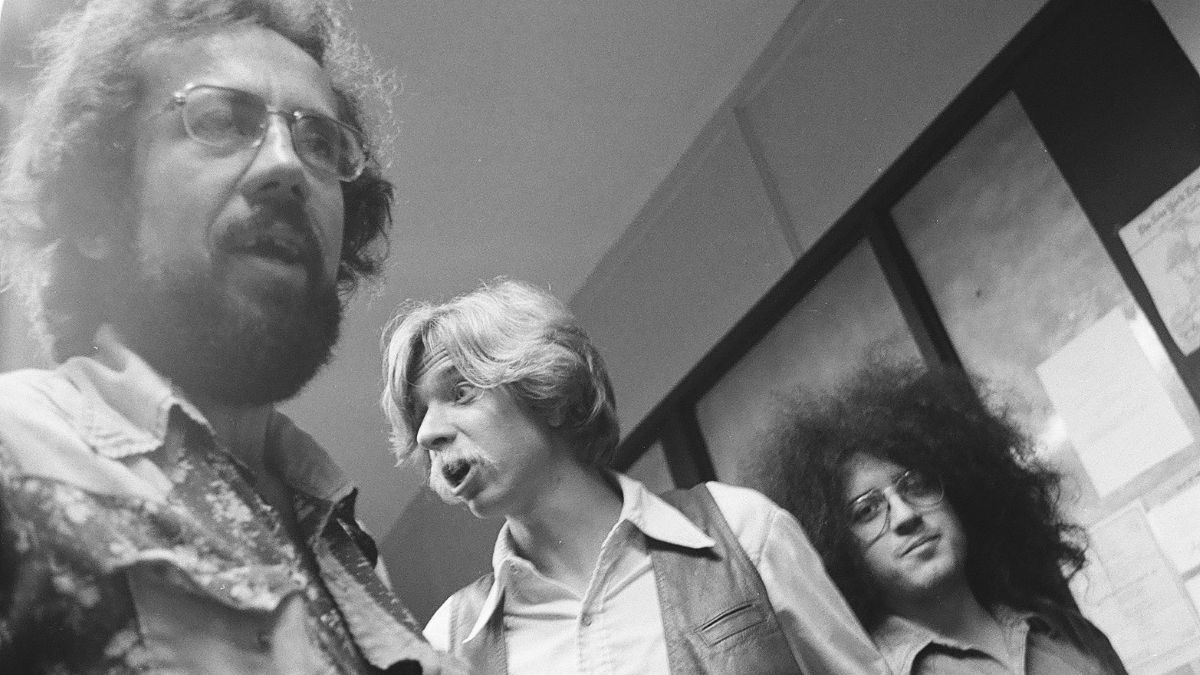
George and I knew each other in New York at Look magazine , where we both worked during the 1960s.

That is to say, we were aware of each other at Look - I more aware of George than he of me.

I was a very young editorial secretary – and not a very good one. (My bosses were people like Betty Rollin, Jack Shepherd and Pat Carbine.) He was a Look writer and a star. He was documenting - no, inspiring - the youth and human potential movements that were fermenting in the San Francisco Bay Area at the time.

George went on to write a number of books, including Education and Ecstasy, The Way of Aikido, Mastery and The Ultimate Athlete. He was a long-time influence at the Esalen Institute. And he was as formidable physically as he was intellectually; he took up aikido at mid-life and earned a fifth-degree black belt.

Though he barely knew me, George was kind enough to meet with me when I first moved from New York to San Francisco in 1969. During that conversation, he gave me some advice I’ve kept pasted to the inside of my forehead ever since.

We were talking about story ideas, and I told him I had one I thought was pretty hot, but I didn’t want to reveal it to him. At Look, story ideas were gold, we treated them like state secrets. If we didn’t keep them under wraps, our competition – Life magazine – might get wind of them and scoop us. We hoarded our ideas.

George’s response took me by surprise. “Don’t worry about it,” he said. “Ideas are not in finite supply. The more you give away, the more you generate. That’s the way the universe works.”

Those aren’t George’s exact words. But they are the way I’ve remembered, interpreted and reinterpreted them over the years.

Following George’s advice has been a useful practice. I’ve learned over time that the more willing I am to help out other writers and share my ideas and (hard-won) expertise with them – the more thoughts, ideas, inspirations and writing tricks (hot ones all!) pop into my mind.

I think of it as the Tao of writing.

Thanks, George. I’m going to keep on thinking about you.

© 2010 Barbara Falconer Newhall

  • Share/Save/Bookmark
Posted in A Case of the Human Condition, GodsBigBlog, The Writing Room | Tagged , , , , , , , , , | Leave a comment

A Case of the Human Condition: The Center of the Universe? It’s a Little Beach in Michigan, of Course

By Barbara Falconer Newhall

The Oakland Tribune, August 9, 1987

Up in Siskiyou mountain country, in the northwest corner of California, there is a spot known to the Karuk tribe as Kota-Mein.

In the Karuk language, Kota Mein means “center of the world.”

Like their ancestors before them, the Karuk people hike up to sacred spots like Kota-Mein, Chimney Rock and Doctor Rock to talk to the Great Spirit and to receive power.

I have never been to Kota-Mein, but I have been to Bass Lake, Mich.

If I were drawing a map of the world, its center would be at Bass Lake, just where its outlet flows into the great, blue Lake Michigan.

I have lived in California for nearly two decades, but like my forebears - my mother, her mother Toto, her mother Nana, and her mother, Grandma Harlow - I return to Bass Lake every chance I get.

I am drawn there as surely as a Michigan mosquito is drawn to the juicy ankles of anyone foolish enough to venture outdoors after dark in a Michigan summer.

Chimney Rock and Doctor Rock have been compared by their devotees to black holes in space, vortexes, whirlwinds of energy. Those spots on Earth have, it is said, the power to give the worthy pilgrim a vision of transcendence.

Last month, I left my husband behind in the Eastbay with a freezer full of spaghetti sauce and meatloaf.

The children and I boarded a Boeing 767 for a pilgrimage to Michigan. I wanted to show them my secret spots. Peter, 6, and Christina, 3, were enthusiastic.

They donned hats and mosquito netting to pick raspberries in the woods with their grandfather.

They watched the cherries being harvested. They caught a toad and inspected a patch of poison ivy.

Peter and Christina in the outlet aboard a classic inner tube.

Peter and Christina aboard a classic inner tube.

They learned to soothe their mosquito bites by wiping them with spit.

They met their great-aunt Ruth and made friends with a half-dozen second cousins, some of whom were drawn here, as we were, all the way from the West Coast.

They chased minnows in the warm, brown water of the Bass Lake outlet.

They took wet fistfuls of the creamy, miraculously clean Lake Michigan sand and let it drip off the ends of their fingers to make dainty drip castles.

They heard the story of the drip castle party their Uncle David and Aunt Alice once threw on the shores of the Pacific.

My brother and his wife, also a Midwesterner, once invited some California friends to a beach party, promising to initiate them in the intricacies of drip castle building.

They discovered, to their chagrin, that Northern California sand does not drip. The project was a flop.

Christina and Peter and their inner tube drift toward Lake Michigan.

Christina and Peter drift toward Lake Michigan.

When they grew sweaty, my children waded down the outlet into the Big Lake. They threw their bellies onto the breaking waves and dove for the smooth rocks buried in the sand.

Again and again, they climbed aboard a much-patched inner tube and drifted down the outlet into the Big Lake.

The hours passed.

My mother sat on a beach towel spread on the sand, watching her daughter and grandchildren. “This is life,” she sighed.

Behind her, Lake Michigan’s waves crashed noisily on the beach, just as they had crashed when I was a girl and when she was a girl and when our great-grandmothers were girls.

When I was a seventh-grader, I painted a picture of this beach in art class. Sand, grass and lake blended together in a misty - and I thought - very successful portrait of my beach.

My art teacher was displeased. “It doesn’t look real,” she said. “Too sweet.”

Before we left, I showed Peter and Christina one last secret spot - the view of the Big Lake and outlet from a high sand bluff to the north.

From this bluff, there is nothing to see but beauty. Even the human bathers, many of them grown fat on too much cherry pie and sweet corn, take on a certain grace when seen from up here.

Photos c 1987 B.F. Newhall

Photos c 1987 B.F. Newhall

I had my Nikkormat along and, as always, I took a picture of the outlet.

The Siskiyou Indians forbid photographs of their “power sites.” When my pictures returned, I saw that, sure enough, it had happened again.

My magical spot was gone. What I held in my hands was a 3 ½ by 5-inch glossy of - just another beautiful beach.

I’ll have to go back and try it again.

© 1987  The Oakland Tribune

  • Share/Save/Bookmark
Posted in A Case of the Human Condition, GodsBigBlog | Tagged , , , , , , , , , , | Leave a comment

God’s Big Blog: I’m Convinced — Doubt Is Good

By Barbara Falconer Newhall

No doubt about it. After opening up the short, sweet and succint In Praise of Doubt by sociologists Peter Berger and Anton Zijderveld, I’m feeling really good about my doubter status.

in-praise-of-doubt-berger-zijderveldDoubt is what makes the difference between a person of faith and a fanatic, the authors assert. Faith is different from knowledge, as in, ”I know that I’m in Boston; I believe that my life is in God’s hands.”

This is a fascinating book that touches on everything from the Enlightenment, Calvinism and the scientific method to Marxism, modernity,  fundamentalism, and the trend toward the secularization of everything.

The two authors make some useful, thoughtful distinctions along the way — for example between the words plurality and pluralism. Plurality describes a situation in which diverse groups live together and interact together, the authors note. Pluralism connotes a value judgement; it welcomes the reality of plurality.

Two very interesting minds are at work in this book. Enjoy!

In Praise of Doubt: How to Have Convictions Without Becoming a Fanatic, by Peter Berger and Anton Zijderveld, HarperOne, hardcover, 179 pages, $23.99, 2009.

  • Share/Save/Bookmark
Posted in Book Openers, GodsBigBlog | Tagged , , , , , , , , , | Leave a comment

A Case of the Human Condition: Another Threat to Lake Michigan — Asian Carp

My Michigan friends are emailing me about the Asian carp threatening to enter Lake Michigan and the other Great Lakes from the Illinois canal system. The carp would seriously endanger fish and other wildlife in the Lakes and local rivers.

Read more at www.stopasiancarp.com 

  • Share/Save/Bookmark
Posted in A Case of the Human Condition | Tagged , , , | Leave a comment