Geographic Mobility in America — Watching My Grown-Up Kids Disappear

Peter at the airport with his bags 2000. Photo by Barbara Falconer Newhall

Peter leaves home for college. Photo by Barbara Falconer Newhall

By Barbara Falconer Newhall

Most of my grandmother’s children – there were seven of them – lived out their lives within walking distance of their mother’s white frame house in Scottville, Michigan. Not my father. He moved away.

Which is why, when I think of my Grandma Falconer I see the pince-nez, the soft pink skin and the silvery-white hair swept into an up-do — but I also see my grandmother’s figure standing motionless at the foot of her driveway, watching as my family drives out of town. [Read more...]

EmailFacebookTwitterStumbleUponPrintFriendlyShare

The Scottville, Michigan, High School Football Team — 1929

The-Scottville-Michigan-high-school-football team-1929. Photo by H.J. Hansen

The Scottville football team, 1929. Photo by H.J. Hansen


By Barbara Falconer Newhall

Oops. I forgot to post the photo of my father’s Scottville, Michigan, High School football team on Friday’s blog. Here it is. [Read more...]

EmailFacebookTwitterStumbleUponPrintFriendlyShare

A Case of the Human Condition: I’m a Woman with a — Sprawling — Past

A corsage my sophomore year.

A corsage from my sophomore year in high school. Photo by BF Newhall

By Barbara Falconer Newhall

The trouble with painting the inside of your closets is — everything has to come out of them.

And then what do you do with all your beloved stuff? [Read more...]

EmailFacebookTwitterStumbleUponPrintFriendlyShare

A Case of the Human Condition: Would My Husband Like to Add My Name to His?

By Barbara Falconer Newhall

January 8, 1989, The Oakland Tribune

Jon and I had been married nearly 12 years. It was time to pop the question again.

I called him at work.

Jon pouring butter on salmon on kitchen counter. Photo by Barbara Falconer Newhall

Jon after 35 years of not being Jon Falconer Newhall — cooking dinner for my birthday in 2011. He’s still comfortable in the kitchen and at the supermarket. Photo by Barbara Falconer Newhall

Sometimes, the best way to get Jon’s attention is to phone.

“What do you think?’ I said, going straight to the point. “Are you ready to add Falconer to your name yet?” [Read more...]

EmailFacebookTwitterStumbleUponPrintFriendlyShare

A Case of the Human Condition: Life — How Much Is Enough?

By Barbara Falconer Newhall, The Oakland Tribune, April 7, 1991

“It’s too bad,” said Reena, my sister-in-law. “You learn all this, and then you die.”

It is too bad. You get a few things figured out. You come to terms with the humiliations and the victories. Then, pow, your time is up.

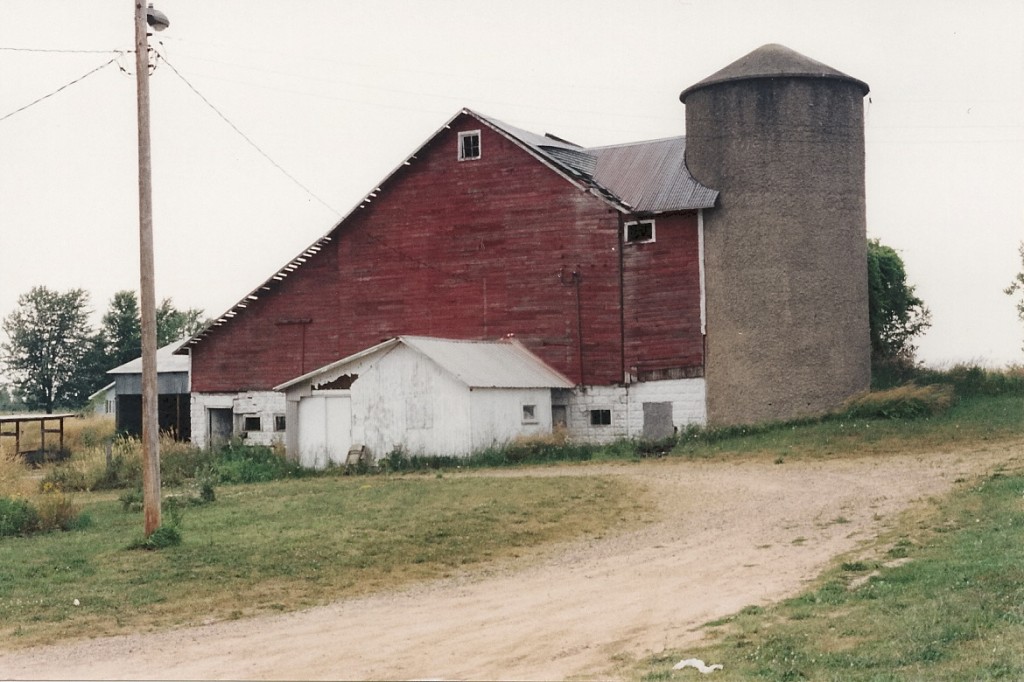
The Falconer barn near Scottville, Michigan

The Falconer barn near Scottville, Michigan

Reena and I had our discussion at the edge of the dance floor at  Furnace Creek in Death Valley. We were catching our breath as a handful of other Newhalls — the 7-year-olds, the 10-year-old and the 80-year-old — rocked and rolled and laughed across the floor.

If I look at that pleasant evening at Furnace Creek Inn just right, if I squint at it out of one eye, I can make myself see that that one evening alone was worth the price of admission. It was worth getting born for.

So was my 16th birthday. My parents’ 50th anniversary dinner in Grand Rapids. The day my old friend Trudy flew in from Connecticut and we stayed up all night talking.

Surely a single evening, if it is in the company of a loyal friend or an intact, good-natured family, is enough to constitute a complete human life. One night under the moon and stars is enough to stun the mortal eye, to knock your socks off with the glory of it all.

But that isn’t the way things work. Usually we get much more than an evening. We get years — 12 years, 78 years, 99 years. And, of course, even years are not enough for most of us.

The decades stretch out interminably. We get bored. We get irritable. We kvetch at our spouses. Our lives are long and so laden with expereinces that we can’t even remember most of them. Yet we want more.

I want more. I want more of my father, for one thing. But that is not to be. My father died suddenly last month. He died at home in Ahwatukee, Arizona, probably of a stroke. My mother was with him.

My father left no debts behind, no unfinished business — material or emotional. To me, his daughter he left a steadfast presence that will be with me until I die.

He was born David Bishop Falconer on June 11, 1912, on the family farm outside Scottville, Michigan. His mother was a second-generation school teacher. His father, a Scottish immigrant with an aptitude for practical jokes.

Like so many of his generation, my father believed in hard work, honesty, loyalty and moderation. He was heir to the Puritan work ethic and, in time, history would reward him for that.

He was in college during the Depression, studying agriculture at Michigan State and Ohio State. When he returned home one Christmas, it was to find strangers at the kitchen table. His family had lost the farm, he was told. They had moved into town. My father walked into Scottville, in tears.

But my father’s generation was a fortunate one. History was on its side. The Depression of the ’20s and ’30s gave way to the affluence of the ’40s and ’50s. The post-World War II corporate world was prepared to reward loyalty and hard work. A vast mid-century migration from farm to city to suburb took place and my father was part of it.

After college he took a job as a warehouse supervisor for a dairy in Flint, Michigan. He also married my mother, a Chicago girl whom he had courted, mostly long-distance, since she was 16. My brothers, David and Jim, and I were born.

D.B. Falconer building a treehouse for his grandchildren

D.B. Falconer building a treehouse for his grandchildren

In time, he was transferred to Detroit, where he moved steadily up the management ladder to become vice president of a large corporation. He joined clubs like the Detroit Athletic Club and the Oakland Hills Country Club. He played a lot of golf.

Family lore has it that my father was on the stubborn side. In fact, he must have been enormously trusting of his environment to allow himself to be propelled from a horse-and-buggy existence to the executive offices and lush fairways of corporate America.

My father worked a lot. He spent large amounts of time at the office and on the telephone. He commuted long distances through arduous, pre-freeway street traffic from our house in the suburbs to his office in downtown Detroit.

I sometimes wondered, as a teenager, whether a man who so loved his work could also love his family. I needed an answer, so I put it to him. “What’s more important?” I asked. “Your job or your family?”

The question took my father by surprise. “I never thought about it,” he laughed. “I can’t do without either one.” That, of course, was the answer I needed.

Intimate conversation did not come easily to my father. When he did overcome his reticence, the exchange was often memorable. He once stopped me in my tracks to say, “You should develop your mind as well as your beauty. That way, when you are old and your beauty is gone, you’ll still have your intelligence.”

Again, the message was not lost on me. I could only conclude that, in my father’s eyes, I was not only smart, I was beautiful.

Friends tell me that it will take time to get used to this loss. At times I feel peaceful — my father was my father. He knew it and I knew it. It is a fact that nothing can change.

At other times I am bereft. My father has been torn from me. The moon has fallen from my sky. I want my dad.

Reprinted by permission of the  Oakland Tribune, Oakland, California, where it was published back in 1991 when I was a regular columnist at the Trib.

EmailFacebookTwitterStumbleUponPrintFriendlyShare
<?php if ( function_exists( 'yoast_analytics' ) ) { yoast_analytics(); } ?>